


MiknitsKnitting Kit - Kyoto
- 2027 New
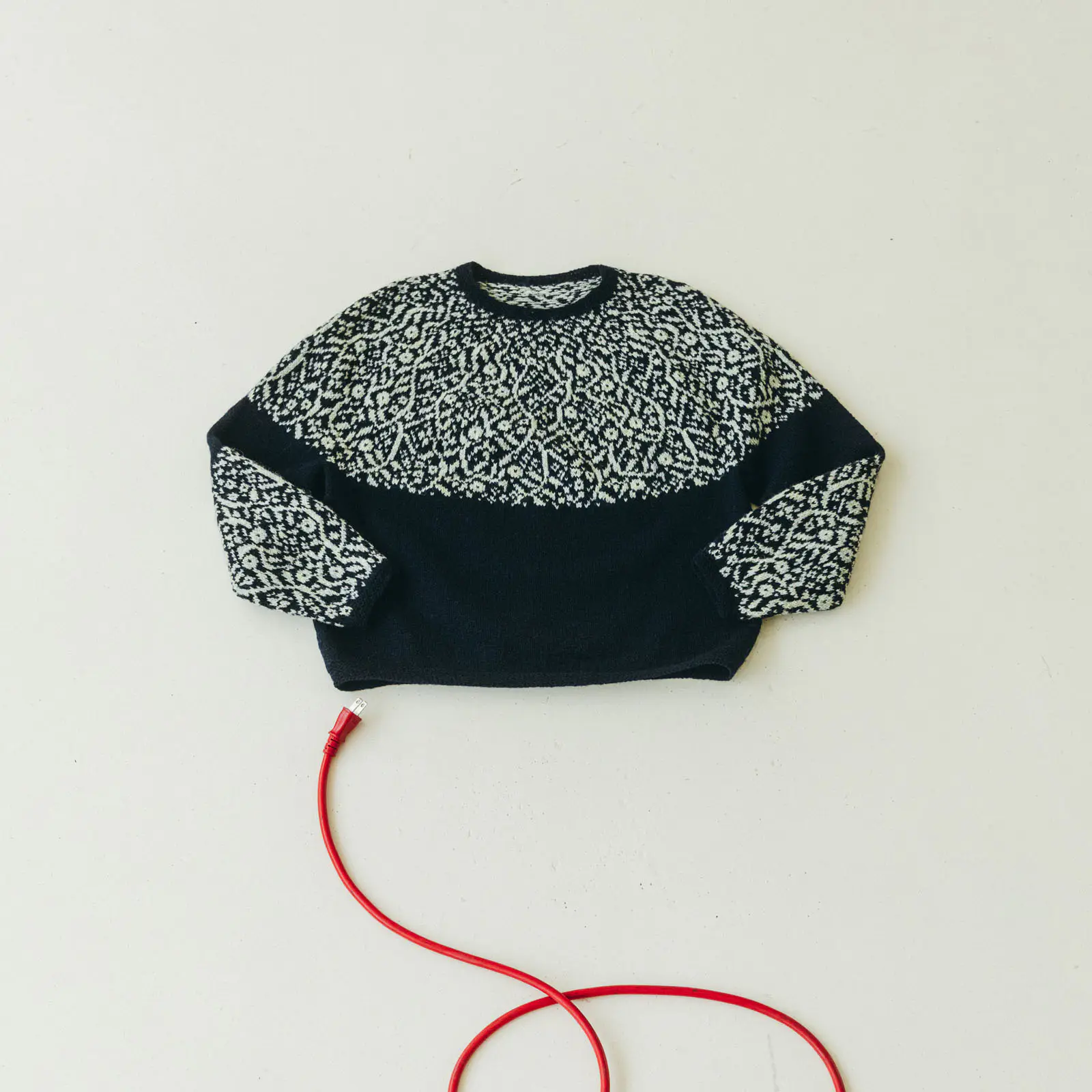
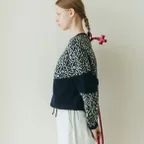
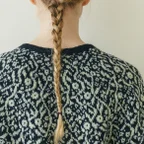
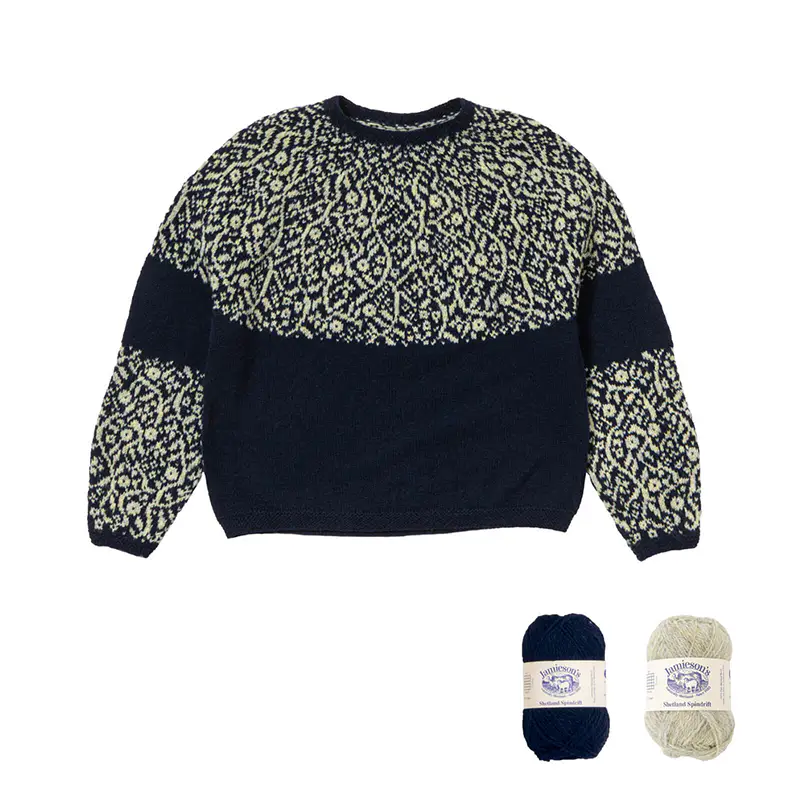
This is a knitting kit for the yoke sweater named Kyoto. The sweater’s beautifully intricate patterns catch the eye immediately, featuring design ideas that developed out of Miknits designer Mariko Mikuni’s fascination with “wa-sarasa” — Japanese chintz. The name comes from Kyoto, the city she traveled to in pursuit of a deeper understanding of sarasa.
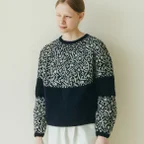
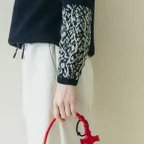
Sarasa patterns are characterized by their delicate botanical and floral motifs. Wa-sarasa developed uniquely in Japan. The patterns that Mikuni developed over many years, inspired by her own encounters with a wide range of sarasa, are woven generously all the way down the sleeves.
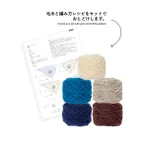
The yarn is made by Jamieson’s. Based in the Shetland Islands in Scotland, this company has a long tradition of manufacturing knitwear, and its yarns are available in over 200 colors. Some varieties reflect the company’s distinctive eye for color — for Kyoto, the patterned sections are made with a yarn called “Rye,” a grey-based blend with hints of yellow woven through it. At first glance, it appears to be a monochrome knit, but a closer look reveals a soft yellow glow that shines through, lending it a beautiful, subtle warmth.
From Mariko Mikuni
I love old sarasa — I collect fabric scraps and often pore over illustrated catalogues and photo books. I’d find myself idly wondering, “What is it that I love about this? Why does it draw me in so much?” But if I had to put it into words, one clear reason would be this: the patterns are so incredibly intricate. The size — or rather, the fineness — of the arabesques and treasures woven into the cloth gives you a sense of devotion overflowing from the hands that made them. And the way those intricate patterns were rendered, never quite keeping pace with the maker’s imagination, given the limitations of materials and techniques of the time — I think that’s part of what makes them so endlessly fascinating.
The second reason is how they blend East and West, allowing different cultures to mingle and ferment on the surface of the cloth, transforming into something entirely new. Sarasa originated in India, but its roots trace back even further west. Eventually, it made its way to Japan, the far end of the Silk Road, where it took on a distinctly Japanese sensibility and was reborn into something more suited to Japanese taste. That is wa-sarasa — and yet even in its “wa” (Japanese) form, there remains a trace of something Western at its core. I find that blend utterly captivating. I wanted to see if something like that could work in knitwear too, and that’s how Kyoto came to be.
When I visited Kitano Tenmangu Shrine in Kyoto in early spring, the Baikasai plum blossom festival happened to be underway. The blossoms had barely opened yet, but the image stayed with me long after I returned home. I found myself thinking: plum blossoms — that could be something worth knitting. The way small flowers cluster together, the delicate branching like arabesques — it seemed well suited to an all-over pattern. Fairly early in the design process, I decided it would be two colors rather than many. I wanted to create something that evoked the scent of plum blossoms drifting through a monochrome world. When there’s too much information for the eyes, it becomes harder to take in the other elements. And for flattering the person wearing it, this balance is probably just right.
The knitting itself is simpler than it looks, and if you’ve knitted a yoke sweater before, you’ll find it moves along smoothly. You start by knitting the sleeves first, which also serves as good practice for the pattern stitching. There’s a front-and-back length adjustment in the body just before the yoke, and picking up the stitches there is perhaps the main challenge. And when you’ve finished, don’t forget to wash and block your work.
Staff List
- Photographer
- Nao Shimizu, Satoru Okita (item)
- Stylist
- Miyoko Okao
- Makeup & Hair
- Hiromi Chinone (Cirque)
- Model
- Lena
Discover more (Accessories)
![]()
- ¥2,750
![]()
- ¥14,300 - ¥25,300
![]()
- ¥8,800
![]()
- ¥6,710
![]()
- ¥19,800
![]()
- ¥1,980
![]()
- ¥3,287
![]()
- ¥10,560
![]()
- ¥1,980
![]()
- ¥3,190
![]()
- ¥1,320
![]()
- ¥418
Discover more (Techo)
![]()
- ¥5,940
![]()
- January-start
- JPN/ENG
- ¥8,360 - ¥9,350
- ¥5,940
![]()
- January-start
- JPN/ENG
- ¥6,710 - ¥7,700
- ¥4,290
![]()
- January-start
- JPN/ENG
- ¥8,910 - ¥10,560
- ¥5,390
![]()
- January-start
- JPN/ENG
- ¥5,500 - ¥6,050
![]()
- January-start
- JPN/ENG
- ¥13,420 - ¥14,410
- ¥11,000
![]()
- January-start
- JPN/ENG
- ¥3,520 - ¥3,630
![]()
- January-start
- JPN/ENG
- ¥6,930 - ¥8,580
- ¥3,410
![]()
- January-start
- Japanese
- ¥3,740
![]()
- January-start
- JPN/ENG
- ¥15,620 - ¥17,270
- ¥12,100
![]()
- January-start
- Japanese
- ¥11,220
- ¥6,600
![]()
- January-start
- JPN/ENG
- ¥6,710 - ¥7,700
- ¥4,290
Specifications*Specifications may vary slightly
Finished measurements (reference) Chest: 96 cm / Length: 59.5 cm / Sleeve length (from center neck to cuff): 77 cm Yarn Jamieson’s Shetland Spindrift
Approximate weight: 4.2 m per gram
Composition: 100% Pure Shetland Wool
Country of origin: ScotlandTools required US 4 / 3.5 mm circular needle, 80 cm
US 4 / 3.5 mm double-pointed needles (set of 4)
US 2 / 3.0 mm circular needle, 80 cm
US 2 / 3.0 mm double-pointed needles (set of 4)
Wool darning needle (for seaming, joining, and finishing yarn ends)
User recommendations
If you’ve used any of these products, we welcome your notes on what you like about them or what led you to buy them so we can share it with customers who are currently considering these products. We’d also love to welcome comments from customers who purchased their techo outside the Hobonichi Store or received their book as a gift.
Please Read Before You Buy
We’ve compiled a list of warnings, potential issues, and tips to keep in mind for this particular product. Additionally, the color of the product may be slightly different in actuality than compared to how it appeared on a computer or smartphone screen.
- About the kit
Mariko Mikuni’s Hand Knitting Kits include slightly more yarn than what would be used when knitting with the specified needles. Please note that we cannot accept returns or exchanges if you run out of yarn during knitting due to not achieving the correct gauge.
The Hobonichi Store cannot respond to individual questions regarding knitting techniques. Refer to knowledgeable knitters around you or search for tutorials on online video sites.
There may be knots in the yarn, which is a result of the manufacturing specifications, so use it as is.
Pulling the yarn too hard can cause it to break.
There may be straw debris mixed in with the fibers; remove before using.
For washing, use room-temperature water with a gentle detergent. Never rub; gently press wash, then place in a laundry net for light machine spin. After spinning, gently stretch the knitted fabric to shape, and lay it flat in the shade to dry.
The size will vary depending on your yarn tension while knitting. Consider the finished size as a reference only.
Dark-colored yarns may transfer color to knitting needles, hands, or clothing due to friction or perspiration.
- Please note
Miknits knitting kits are designed for the enjoyment of the knitting process itself and for personal use of the finished item. Please refrain from selling finished pieces for commercial purposes, including listing them on resale platforms or secondhand apps.
The pattern included in this kit is protected by copyright. Except where permitted by law, reproduction or duplication by any means (including photocopying and scanning), publication on social media or the internet, secondary use of the pattern, and commercial use of works based on this design (including selling finished items or using the pattern in a class setting) are strictly prohibited.